When we think about pelvic floor health, the focus is often on the muscles deep inside the pelvis. But what many people don’t realize is that the glutes play a major supporting role. Strong, well-coordinated glute muscles help stabilize the pelvis, improve posture and movement mechanics, and reduce unnecessary strain on the pelvic floor.
At Coast Performance Rehab, we take a whole-body approach to pelvic health. Below are five glute exercises recommended by COAST Pelvic Floor Physiotherapist Ane Atorrasagasti to help build strong glutes while supporting pelvic floor function. This routine is suitable for many people and can be modified as needed.
As always, if you have pain, symptoms, or specific pelvic floor concerns, consult with a physiotherapist before starting a new exercise program.
1. Banded Glute Bridge
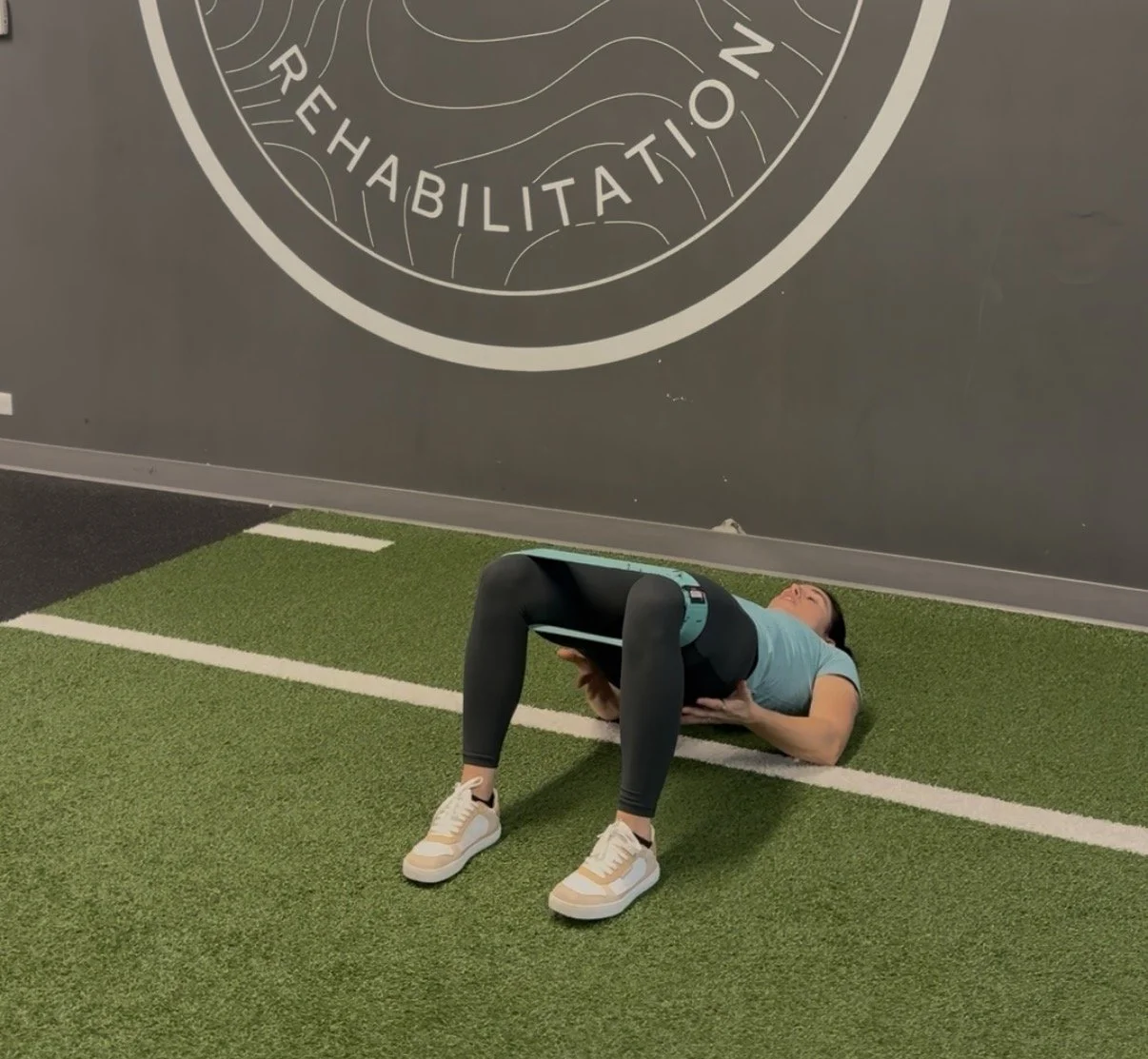
This exercise activates the glutes while encouraging proper pelvic and core engagement.
How to perform:
Place a resistance band around your knees.
Lie on your back with your knees bent and feet flat on the floor.
Keep gentle tension on the band.
Drive through your heels and lift your hips up.
Squeeze your glutes as much as possible at the top.
Hold for 2 seconds, then slowly lower back down and fully relax before the next repetition.
Focus: Glute activation, control, and full relaxation between reps.
2. Banded Clamshells
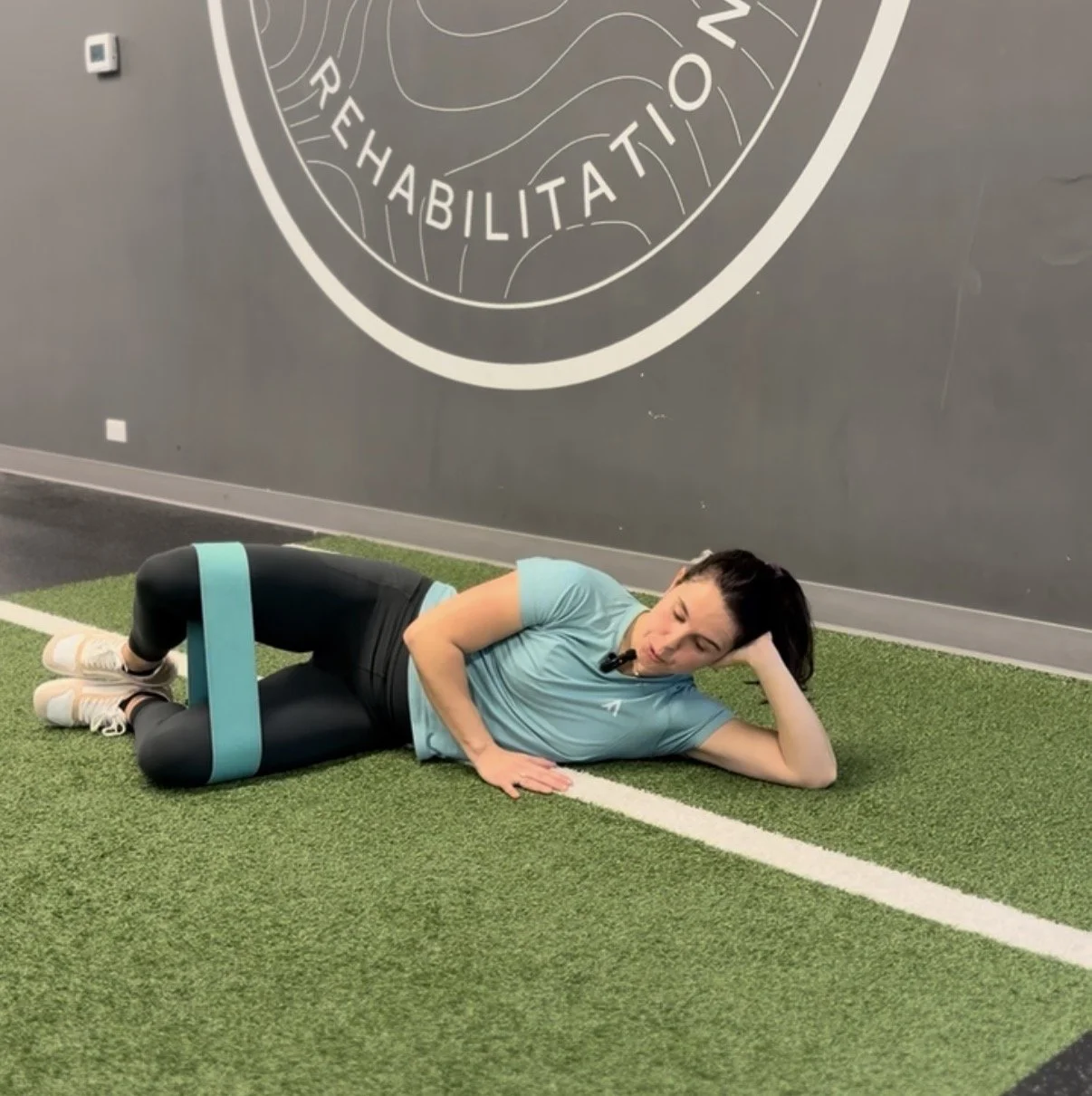
Clamshells target the side glutes, which are key for pelvic and hip stability.
How to perform:
Keep the band around your knees.
Lie on your side with hips stacked and knees bent.
Keeping your feet together, lift the top knee as far as you can without rolling your hips back.
Squeeze your glutes at the top.
Breathe out during the effort and breathe in as you reset.
Focus: Controlled movement and coordinated breathing.
3. Banded Squats
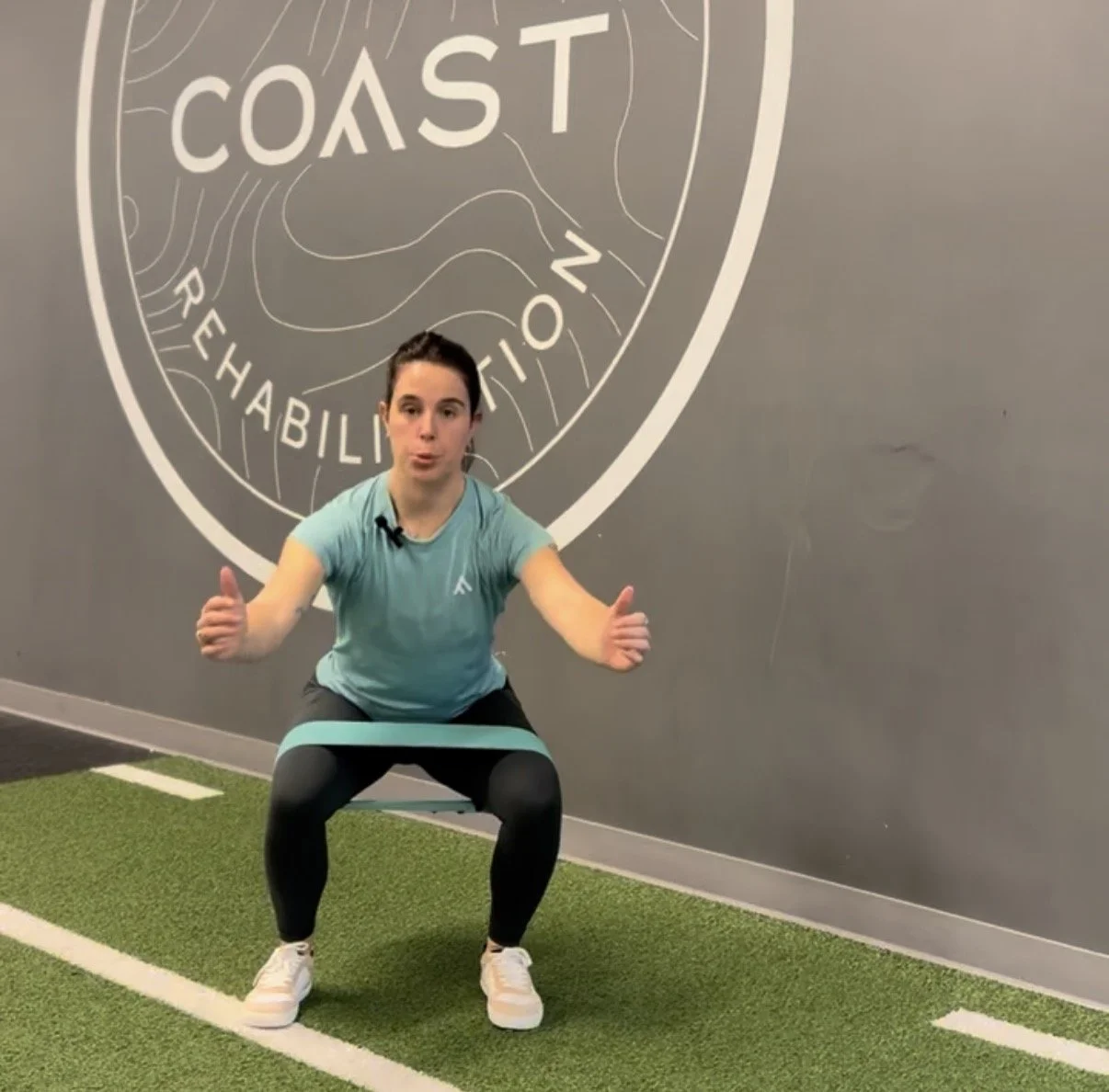
Adding a band to squats increases glute engagement and improves hip control.
How to perform:
Place the band just above your knees.
Stand tall with good posture.
Keep tension on the band throughout the movement.
Sit back and down as if you are lowering into a chair.
Pause for 2 seconds at the bottom.
Drive back up while maintaining tension on the band.
Focus: Posture, glute engagement, and steady breathing.
4. Hip Extensions
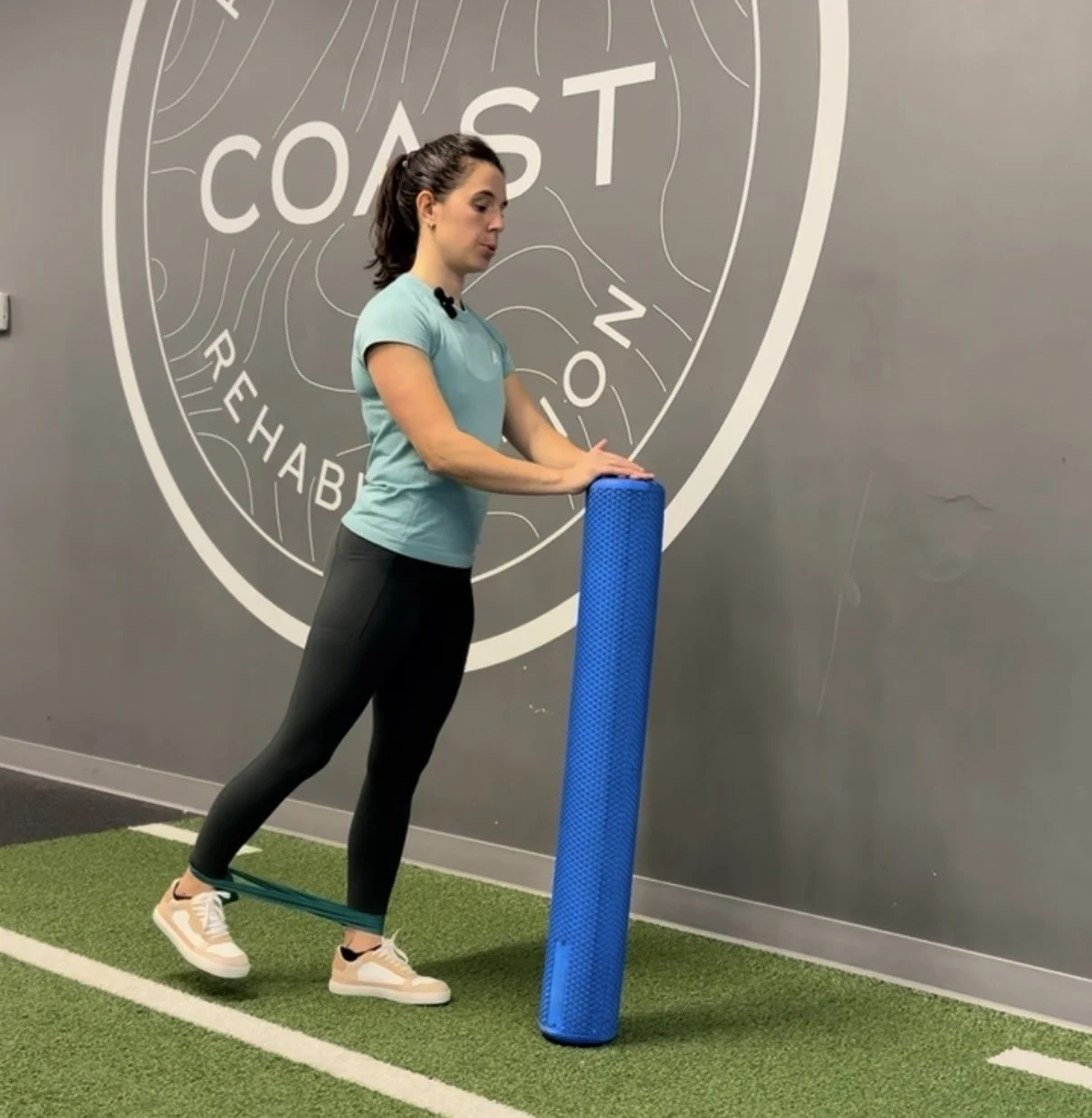
Hip extensions isolate the glutes and help reinforce proper movement patterns.
How to perform:
Use a wall or chair for balance if needed.
Place a light resistance band around one ankle.
Stand tall and engage your core.
Keeping the leg straight, drive it back using your glutes.
The movement should come from the hip, not the lower back.
Focus: Glute-driven movement and upright posture.
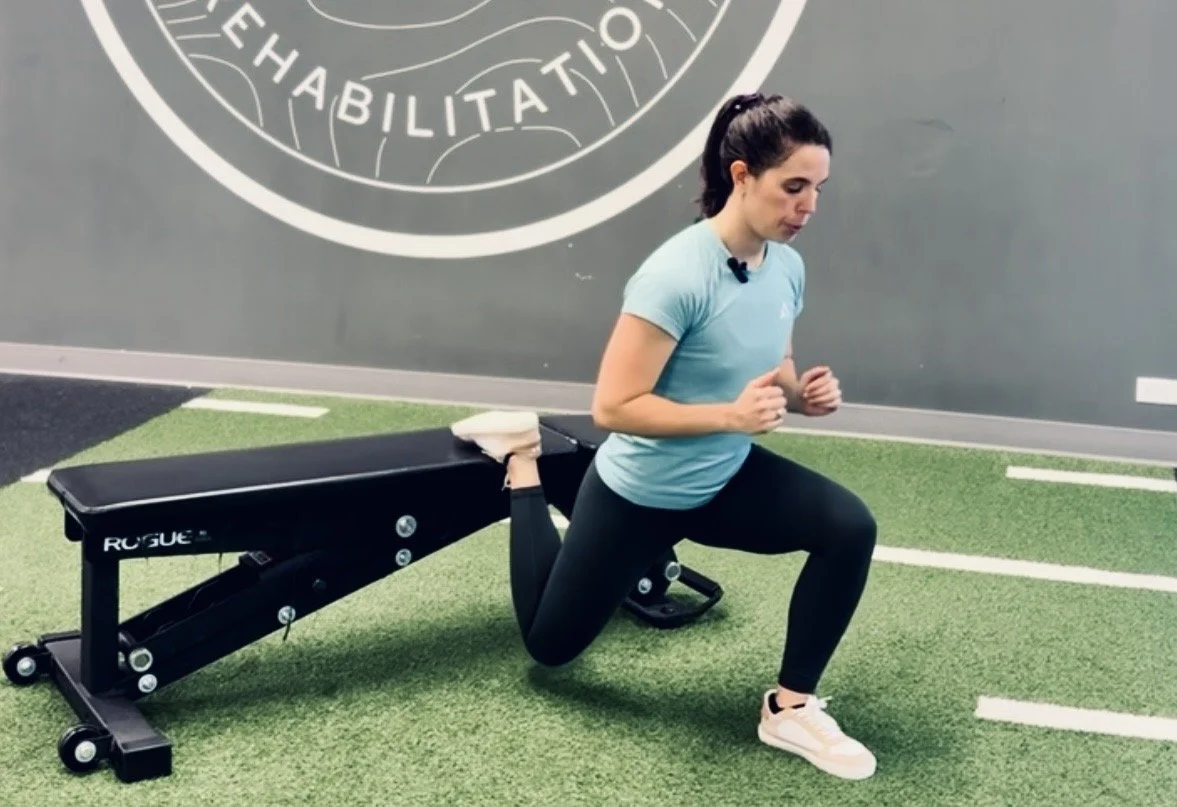
5. Bulgarian Split Squats
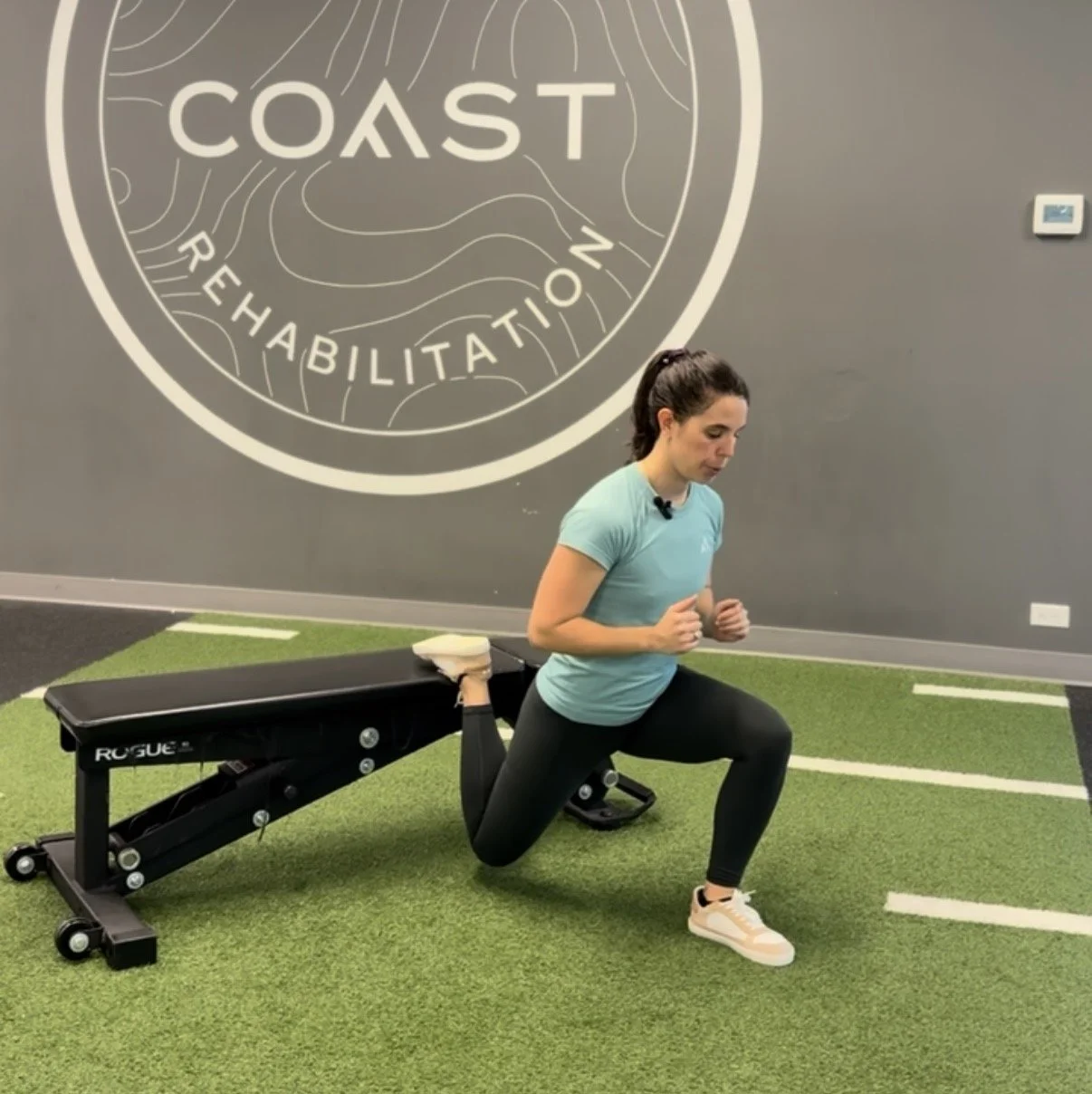
This single-leg exercise builds strength, balance, and control.
How to perform:
Rest your back foot on a bench or elevated surface.
Your front leg should have a slight bend, with the knee staying above the ankle.
Lower down by bending your back knee toward the floor.
Try to lower as far as comfortable while maintaining control.
Move slowly and deliberately.
Squeeze your glutes as you return to standing.
Focus: Slow, controlled movement and strong glute engagement.
Why Glute Strength Matters for Pelvic Floor Health
By training the glutes with intention and proper technique, you’re supporting not just strength, but long-term pelvic health.
If you’d like guidance tailored to your body, goals, or symptoms, a pelvic floor physiotherapist at Coast Performance Rehab can help create a program that’s right for you.
If you’d like guidance tailored to your body, goals, or symptoms, our pelvic floor team at COAST can help you build a program that fits. Appointments are available in North Vancouver, Kitsilano, and Squamish, so you can get support close to home and keep your training moving in the right direction.
